Opening Remark

Recently I had a conversation with a good friend, in which I expressed my opinion that all academic pursuits are basically fraud. He disagreed by saying 'autheticity is my middle name'. This prompted me to question myself what would be mine, and I find no more suitable word than Cynicism. Hence, from today on, my name is Peidong C. Young, C for Cynicism. 9/7/10


Tuesday, 9 December 2014

写给二十九岁的自己:振作,振作!


也许太累,太久…… 已经忘却了自己曾经是多么乐观、多么努力的一个人。曾经为了自己想要的东西可以不顾一切地去努力,即便今天的沉沦正是因为意识到当初那些“努力”都是惘然甚至盲目的,但那种为梦想、妄想而执着的精神仍然是可贵的吧?

我什么时候变成这样子了?一切都不晚啊?怎么这会儿就要放弃了?真正的成功和胜利,对谁来说不是建立在一种近乎幼稚的执着上?

态度不能决定一切,但谁又敢说它不在某种程度上影响事物的发展?你用失败的预设去展开你的人生,恐怕很难收获成功的。你用病态、痛苦的眼神看世界、看他人,得到的是加倍的病与痛苦。不是那种接近妄想狂的执着支持你走到今天的吗?——没说我有什么“成就”,但我至少走过来了,并且是在一种动力下走过来的…… 不能放弃那种动力!

没有必要追究过往,并在这种无意义的追究中失去了你最亲的人。别让你自己在将来的某天追悔莫及!人生中的诸多东西固然不能由你左右,是所谓天定,但你也不要忘记那些人力能够改变的东西!

为什么要消沉?你有什么理由消沉?消沉更加对不起自己。连自己都舍不得再给自己多一次机会,你真就有这么吝啬?

凡事用不着想的太绝对。诚然,二十来岁的黄金时代已然过去;那种幼稚的冲劲已然不再;但也不必还在自己不到三十岁的时候就给自己下判决书,断定自己无可救药,盖了棺了吧?

很多事已经定了,不能改了,还何苦去想“如果当初……”?人生如棋,落子无悔。没有什么“如果……”之说。若说有“如果……”,也许恰应该用在当下——“如果现在不振作……

没有得到想要的不代表未来就全无希望。站在二十来岁的末端往回看,你看见一个令你种种讨厌的自己,但有一点不讨厌:那就是那个年轻人郁闷表面下的上进心——一种强烈的、不达目的不罢休的欲望。

如果说今天的你——即将跨过三十岁门槛的你——和十年前甚至仅仅五六年前的你在心态上有什么显著的不同,那也许便是最近的你已经不太相信努力还能把你带向前进。然而,持着这样的念头,你必然不能前进,于是自己主观内因造成的后果变成了印证你预设的客观外在事实。十年后,你若会有什么后悔的话,肯定便是你今天即将陷入的消沉。四十岁再来后悔,真的晚了。所谓“大器晚成”的人,必然在年轻时是何等的执着与专注!今天,希望还在;欲火还能再燃烧一次,也许……必须!!

人在二十多岁时的努力是一种相对理所当然的努力:体力正旺;成年人生的启始章尚待书写;事业的道路仍待走出;周围的同龄人也都孜孜奋斗着…… 因为还一无所有,所以没什么可以失去的;可以收获的却不少。从这个角度看来,二十多岁时的努力并不难付出,因为世界还是那么新奇,而机会成本却小,你只要大胆往前冲便是……

当成年人生和事业的启始章已然写毕,生命的书翻向所谓“而立之年”一章时,努力变得不再那么“理所当然”,而是更需要一种信念的支持。经历了种种失落、失败、梦想的破灭、从妄想中的醒来,二十多岁这十年让人知道人不能胜天;努力有它的上限;命运与运气构成局限、左右人行动的纵横沟壑。

但!即便是这样,在尚未跨入而立之年门槛时便选择消沉也未免太早!也许精力的确不如以前,那便用百分之八十的精力;也许的确启始章已然墨干,但仍有“而立”一章待你笔酣墨饱,用更稳健的态势,更成熟的技巧去书写!三十多岁的你必须做的不是少一些妄想与执着,恰恰是更多!唯有如此你才能克服由于年龄渐长和现实打击所带来的疲倦,你才能抵抗这种疲倦带来的放任自流的诱惑。

站在二十多岁的末端,你向那个年轻的你告辞;站在三十岁的门槛,你要向那个年轻的你致敬、学习!

Wednesday, 3 December 2014

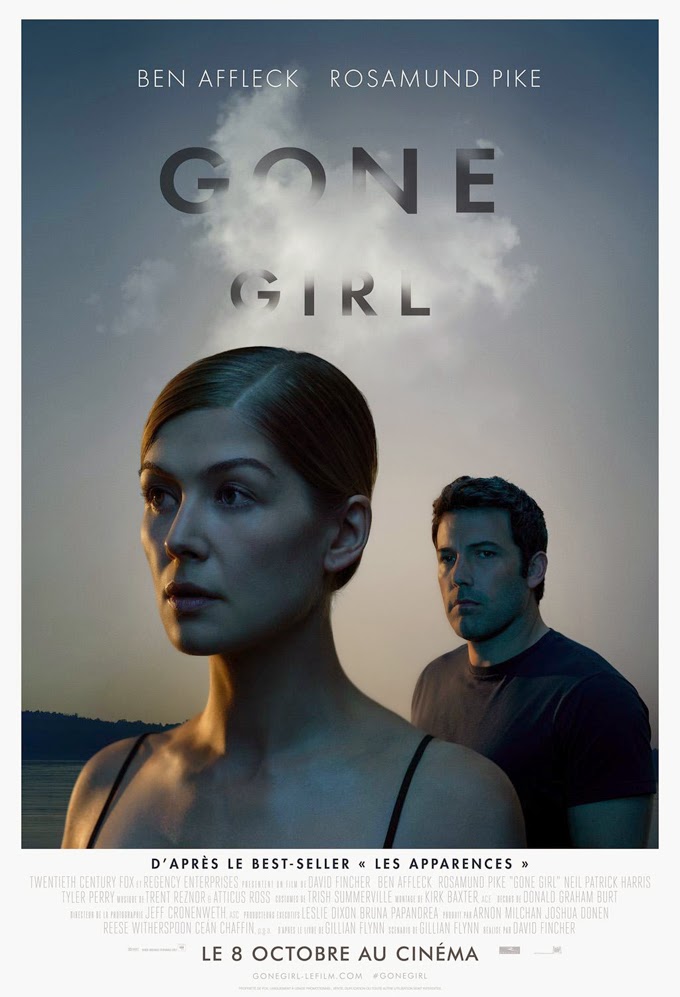
Gone Girl: the ultimate Lacanian film about the “big Other”, desire, and class


    Although the film Gone Girl (David Fincher 2014) started and ended with a close shot at Amy’s beautiful blond head, which then turns around to display her inscrutable smiling face and eyes, accompanied by a male voice in the background asking what is apparently the key question of the film—and I paraphrase—“What really goes on in the mind of the other in a marriage?”, this theme of the irreducible otherness of the other, the impossibility of genuine trust and transparent communication in a relationship, in my opinion, is probably the least interesting of the manifold themes the film offers up for us to savour. Of course, at a basic level, the film indeed tells a story about how a relationship developed so “perfectly”, into an enviably happy marriage, but then turned not just sour but positively horrific; it tells how two people who seemed so deeply in love could in fact have not the faintest clue as to what the other truly is. But this reading is simplistic and therefore boring because it assumes that there is a “truer” identity behind the surface—the “truer Amy” is supposed to be what many viewers of the film might call a “control freak”, someone who wants everything to go according to her perfect plan, for which she would do anything to manipulate people’s opinions and behaviors. This interpretation then reduces the film to a story about a manipulating and vengeful woman and her deeds (which also invites the accusation of misogyny), and the much greater richness in the film is lost.

    With such relatively uninteresting interpretations cleared off the way, I propose that Gone Girl is the ultimate film—in my impoverished film viewing experience—about the Lacanian ideas of the “big Other” and desire. Indeed, one almost feels as if the story was written with Lacan’s theory as its underlying theme and structure. One is tempted to wager that the author of the original novel, Gillian Flynn, has had many a sticky finger in Lacan’s works before she wrote the story. Let me be upfront with my arguments: the view of the big Other (“big Other” stands for the symbolic order, the fictional universe, and also commonsense and public opinion) is all that matters to Amy, and Amy is simultaneously a character in the symbolic fiction and also herself the author of that fiction; desire is a desire to be desired; in other words, one desires the big Other’s love, desire, and approval.

    Earlier on in the film, we learn that Amy was a very privileged young women who also served as the real-life inspiration for the widely popular and loved character of her mother's fiction series “Amazing Amy”—Amy's symbolic double. What Amy could not achieve in her real life, Amazing Amy pulls off effortlessly. So although Amy “gave up cello at eleven”, Amazing Amy became a virtuoso; although Amy never did cheerleading or was never good at it, Amazing Amy “entered the Varsity”. As Amy said at one point: “She [Amazing Amy] is always a step ahead of me.” Obviously, here we have a perfect instantiation of Lacan’s classic “mirror stage” scenario: Amazing Amy represents Amy’s ego-ideal in the Imaginary order. Amy is the infant who looks into the mirror and sees her more complete, more accomplished image. Just as in the "mirror stage" scenario, it is the (m)other's gaze from aside that affirms and secures this rival-identificatory relationship between the ego and its ideal, even more so in this case: it is in fact the (m)other who authors the entire fictional space, spins the symbolic web which holds Amy's position in it. As the film progresses, reference to Amazing Amy disappeared, and all is now focused on Amy herself; this is because, by doing the crazy things she did, she has clearly transcended real life and entered the very realm of fiction itself; in other words, for most of the film, Amy has become Amazing Amy, as we viewers were indeed held in awe at what she did. The ego and its imaginary ideal have merged into one, and to this extent, we must say that the film has a perversely happy ending!

    The point that all that matters to Amy is the world’s view, and not some so-called “inner truth” or “real” state of things is one that I believe I need not labor on too much. “We are the happiest couple I know”, Amy wrote in her diary. Of course, this statement implies a comparison – “happiest” compared to how other couples she knew appeared. The point is: for Amy all that matters is how her relationship with Nick appeared to the world, to the “big Other”. It is as if she wants the top prize for being the happy couple. Appearance is essence, at least for Amy; and the view that there is something more true/authentic about Amy hidden behind a façade is one to be utterly resisted. This also explains what appears to me to be the crucial turning point of film, namely, the point at which Amy, taking refuge at Desi’s luxurious villa, saw Nick going on national TV to tell the world lies (“I love my wife” “I love you, Amy”…) to save his reputation and try to win the public’s sympathy. Most clearly, Amy was transfixed when she saw and heard Nick tell those lies—she gorged on ice cream and appeared totally mesmerized by what Nick said. I argue that this was the moment at which Amy made the decision—her most risky and daring one yet—to kill Desi in order to return to Nick. (One must remember, that Amy ended up at Desi’s place was not in her original plan, and therefore, a new plan had to be made.) It mattered not the slightest whether Nick was actually lying or not; since his words were said during a show that reaches “tens of millions” of American TV viewers, it is truth for Amy, and Amy liked it very much—it was exactly what she wanted. Thus, the lies that Nick told the world, mediated through the “big Other” of the TV networks and hence public opinion, became the truth that amazing Amy would kill an innocent person for.

    The reason that Amy was willing to take such a risky step—after all one must remember that Amy was never even completely sure that her revenge on Nick was going to succeed because she included “kill self” as one of her options—was because what Nick said fitted her fiction too well; it was exactly what she desired. And what did she desire? Precisely Nick’s love and desire; and what perhaps matters more is that this love and dedication from Nick has to be sanctified by the “big Other” of public opinion—it has to be witnessed on national TV and therefore become a matter of public record. Here we see the Lacanian rule that “desire is a desire to be desired” working on two levels: Amy desires Nick’s desire, and because Nick told the world about his love and admiration for Amy, she also stands to win the world’s love and approval. This is the ultimate temptation that Amy could not resist, and poor Desi became the sacrifice.

    Here, in my opinion, one confronts one most interesting puzzle in the film. Why Nick? Why can’t Amy get over Nick? Doesn’t Desi also offer desire and love, and therefore the possibility to satisfy Amy’s desire for an other’s desire? Obviously, Desi’s desire for Amy is undying and intense, after they broke up for so many years. Furthermore, being a wealthy and cultivated person, Desi seemed far superior to Nick and therefore an unquestionably better “match” to Amy. While they had breakfast at Desi’s fancy villa, Amy confirmed Desi’s greater cultivation—that he could discuss with her 18th century classical music and 19th century paintings. Objectively speaking, then, by opting for Desi, Amy will be in even more enviable and perfect a couple in the world’s eyes, so why does Amy still go for Nick in the end? Here, the theme of class enters the scene. One small detail is worth paying attention to: after breakfast, Desi leaves for work; Amy sends him to the door, kisses him while biting his lips, then also roughing up his hair and untucking his shirt, adding aggressively: “This is how the boys wear it!” The comparatively uninteresting way to read this is that Amy was again being the “control freak” that she is, namely, she wants her partner to look exactly the way she fancies. But an alternative reading is that “the boys” stand for people of the lower classes—whose rough, masculine demeanor and style represent to Amy, a higher class woman, an inexplicable attraction; and of course Nick was very much that rough boy from countryside Missouri of lower birth compared to Amy whose parents are handsome upper-class New Yorkers. Here, we glimpse the ideological kernel of the film: Amy’s desire for others’ desire is the upper-class’s desire for the lower classes’ desire. We have various common words for this desire in the vocabulary of capitalism/neoliberalism: aspiration, ambition, etc… It is this desiring gaze cast by the dominated class upon the dominant class that is the ultimate object of desire for the latter. We recall that when Nick went on the national show, he did confirm this: Amy was the best; she brings out the best from him; he couldn’t appreciate how fortunate it was for him, a lower-class, relatively uncultivated person, to have someone like Amy as his partner… This was the desire Amy would kill for.

    At the core of the film, there is arguably a fundamental paradox. Namely, on the one hand, Amy is undoubtedly the Nietzschean super(wo)man who remorselessly manipulated and exploited others and yet remained completely beyond touch, beyond law or punishment; on the other hand, her success involves her assumption of a role that is very much still structured by normative gender ideology. In one of the last scenes of the film, she acts the perfect housewife who cooks breakfast in the morning for the husband. All that she wants is to live the perfect happy married life as defined by dominant social expectations. In other words, for the “correct” appearance, she would do anything; all her agency is exercised to serve the structure. This paradox pertaining to Amy, in the final analysis, is perhaps also the dilemma confronting God. As Schelling said, God had to create the world in order to avoid His own madness; He creates the world only to be Himself relegated to a restricted position and capacity; He becomes the hidden God (Dieu caché); in short, God created a world not to be a master over, but in order to avoid the madness that would result from His infinite powers. Same with Amy: for someone of her abilities, if she did not take refuge in a purely symbolic - one could even say alienating - position authored by her (m)other, her only option would have been madness. This is why not only the film has a “happy ending”, Amy is most definitely not a mad woman either.

Wednesday, 20 March 2013

An Anthropology of the Shallow and Boring - musings from the fieldnotes


[I rediscovered this entry dated on 2nd Oct 2011 while revisiting my fieldnotes recently. I find the condescending tones here amusing, which perhaps reflect the frustration that I was experiencing in fieldwork then. Since this is unlikely to get to anywhere else, I thought I’d just share it for people’s amusement. It’s obvious that I felt a bit smug about coming up with this metaphor at that time; but now I realize it was probably a metaphor of Geertz's surfacing from my subconscious.]

 
    The work of an anthropologist is like observing a Monopoly card game or 三国杀, not knowing the rules and trying to figure out them. All the players in the game know the rules by their heart, though perhaps to varying degrees of skillfulness. The small booklet explaining the rules of the game that comes with the set has now been misplaced, and the puzzled anthropologist looks at how players deal the cards and move on the game. They are enjoying themselves, thinking, strategizing, plotting against each other, and carrying out actions. They laugh and banter among themselves; but the observer feels lost. The rules can be fairly complicated, and on the cards are strange and colorful symbols which are part of the rules; and sometimes the function of a card is written on the card itself. But the anthropologist, observing the game over people’s shoulders and being distracted by players’ exclamations and bantering, cannot see clearly what’s written on the cards. His task is to figure out, as far as possible, the rules that govern the players’ actions.
    Intellectually, the game is shallow and boring; and the anthropologist feels this by instinct. But until he has figured out the rules, he is actually the most vulnerable and stupid among them all. The anthropologist knows that the players are also boring and shallow: their laughter, their banters…all quite trifle; but even for the boring and shallow, some rules govern their actions; and until the anthropologist uncovers those rules—they may not be stable but rather dynamic rules that are re-/constructed on the go—he cannot dismiss them. He has to produce an account adequate enough to explain the players’ behaviors; he is an anthropologist of the shallow and boring, but his understanding is neither shallow nor boring.


Monday, 4 February 2013

从对“纯粹”的追求说起: 听牛津中国学联“思享之周”讲座系列的一点杂感

 
        加藤嘉一先生在他的“走出教育”演讲中指出他认为的中国高等教育的一个主要问题:即行政化、官本位、“老师不像老师”、“学生不像学生”、“都去争当官了不搞学术了”云云。
        笔者虽不曾在中国高等院校学习工作,但也相信这是很到位、恳切地批评。领导南方科技大学教育改革的朱时清院士的最主要目标亦是摆脱行政化的束缚、打造一流的研究型大学。他认为,中国的大学的运作模式还是官方的行政机构,而不是以学术活动为中心的学术机构;改革就是要把行政权力拒之一臂之外,实现“教授治校”,还大学以其本来面目、宗旨。换言之,和加藤先生的论点相同,目的是让学术机构变得更“纯粹”。
        陈有西律师、贺卫方教授关于中国法治的讲座,如果从以上视角解读,其实也可以说是对中国法制体系的更“纯粹化”的诉求。有法不依、执法不力、法律变成实现政治目的工具等等批判其实也就是在批判中国法制体系没有发挥它应有的功能、扮演它应该扮演的角色。法制体系也不“纯粹”。
        诸多这些对“纯粹”的追求都是最积极、最善意的;几位实干家的热忱和身体力行的作风也着实让人钦佩不已。但是,同时,我们若能也从学理的角度把这个“纯粹”分析一番,了解其复杂性与相对性,或许能更加切乎实际地开展将来的理解和实践。
        对于一个社会机构(social institution)例如教育体系、法制体系、高教体系,有某种特定的功能上的期待可以说是社会学人类学中“结构功能主义”(structural functionalism)的一种体现。人们认为教育体系的功能就是教书育人,而高等教育体系的功能还包括搞学术研究,法制体系的功能是裁判社会纠纷、维持社会秩序、彰显社会正义;而这种种不同的社会机构犹如人身体的不同器官,相互配合,相互作用,使得整个社会能够有序地运转下去。社会的有序运转成为最高的、终极的目标,其它下属社会机构发挥各自功能,为这一终极目标服务。(也就是以前说的“每个人都是社会主义大厦上的一颗螺丝钉”。)在这种理解下,不同的社会机构自然有了它的一个“纯粹”的形态——也就是完成它应该完成的任务——而人们对不“纯粹”的形态和做法进行抨击。这个理解其实没有错误,只是略为片面。
        费孝通在他著名的“差序格局”的论述中指出,中国的社会格局“好像把一块石头丢在水面上所发生的一圈圈推出去的波纹。每个人都是他社会影响所推出去的圈子的中心。被圈子的波纹所推及的就发生联系。每个人在某一时间某一地点所动用的圈子是不一定相同的”。这造成了在中国“他”和“己”的范围变得相对化、不固定、能伸能缩的情况。“范围的大小也要依着中心的努力厚薄而定”。费孝通举例说:大家族如《红楼梦》中描述的,“凡是拉得上亲戚的,都包容得下。可是势力一变,树倒猢狲散,缩成一小团。”
        如果我们把这种对社会关系伸缩性的理解方式应用到社会机构上,那么我们可以提出:具体社会机构(例如:教育、高教、法制体系)在作为更大的一个社会的组成部分的同时,它自己也是一个社会;当我们的分析视线聚焦到这个具体的社会机构上时,这个社会机构就成为中心,而它的持续运转就成为最高的、终极的目标;至于它还能不能达到人们和社会赋予它的“纯粹”的功能,已经是次要的了。也就是说,原来我们认为只是一个器官的社会机构,现在,在倍数不同的显微镜下,成为了一个以自我为中心的生态系统,别有洞天。在这个生态系统里,又有各式各样的下属机构,各自发挥功能,目的就是维持这个系统的运转。这个机构的运转就成为了压倒一切的目的,正如前面说的社会的运转被认为是压倒一切的目的。这个生态系统遵循一套自己的行为规则、秩序。所以,譬如“中国的高等教育简直就是乱了套了”、“中国的法制体系简直没有法则”这样的说法就不准确了。不是没有法则,只不过是说这个社会机构现在运行的法则和我们想象的、理想的、“纯粹”的运行方式不一样罢了。大家都知道任何社会机构中都有着一套严密的“潜规则”,世俗上成功的人常常就是精于这一套潜规则。
        当然,这里我决不是为我们认为不好的、道德上让人不能接受的社会“潜规则”作辩护。我的目的只是从学理的角度来说明,任何社会机构都要从它的外部功能(也就是“纯粹”的一面)和它的内部有机性与完整性(也就是它“自成一体”的一面)两个视角来相对地观察、理解。
        那么这个自成一体的运行方式有一些什么特征呢?
        杜维明教授在他的演讲中提到了亚当斯密所推崇的“经济人”(homo economicus)的说法。亚当斯密认为,人从根本上是追求经济利益的动物,只要实行自由主义,让人按照自己利益最大化的目标去行事,便可以达到社会的最繁荣,因为会有一双“看不见的手”来规制人们的行为,使得他们的行为在个人利益最大化的同时也顾及整个社会(即其它的“个人”)的利益。但在强调“经济人”的时候,我们是否忽视了人性的另外重要一面,即所谓的“等级人”(homo hierarchicus)?“等级人”的观点强调,人类社会是必然形成等级秩序、等级关系的;甚至可以进一步说,人其实是有服从等级制度,甚至认同等级制度的倾向的一种动物。
        在通常的“社会角色”/“社会分工”的语境下,我们较能够理解角色间的互补互惠关系;但说到“等级制度”,我们总觉得有不公平、压迫、剥削的意思,但其实两者间没有本质区别:等级制度是角色分工体系的一种狭义的、极端的形态。也就是说,等级关系的背后仍然是利益的双向授受,与社会角色间的利益授受同理。这个关系模式可以理解为一个金字塔结构和一个循环结构的复合体,金字塔代表等级秩序,循环代表利益互动关系。学生要拍导师马屁,可是导师也要成全学生,否则他将来“导”谁呢?学生在年轻阶段要做“廉价劳动力”,给“老板”打工,甚至自己的研究成果要冠导师名;不过等学生熬成了导师,他便也可以再“压榨”自己的学生,享受胜利的果实了。日本职场中的“年功序列”也是一个道理,才出道的做牛做马,熬出头的坐享其成;不过,才出道的有一天也会熬出头的。这种等级制度下的权利授受的周期很长,但绝对不是一个利益单方向流动的体系,因为单向流动与社会组织的根本原则相抵触。抗议各种“潜规则”不公的人其实是抗议这个利益循环周期太长,而想在较短的周期内实现自我利益的兑现,所谓“任人唯贤”(meritocracy)就是要将个人才能最快地转化成为现实利益。
        最后,回到前面对社会机构的分析:在这个“别有洞天”的社会机构生态系统里,以上的这些原则大致决定了系统里的角色的行为方式。但是,最大的前提是,必须有外部输送进来的利益,作为这个生态系统运行的原材料和原动力。直白地说,也就是外面要给系统一块大蛋糕,系统里面的人才能按照high table, low table, senior common room, junior common room这些规则来分蛋糕;外面要给一个球,系统里面的人才能按自己的规则踢。只要这个蛋糕/球一直源源不断地有,这个生态系统里面的既得利益者就会维护现有规则。当有一天蛋糕没有了,或者球从足球换成橄榄球,才可能让社会机构内部运行机制彻底大洗牌。
        只有当一个特定社会机构自成一体的运行严重威胁到整个社会的运行时,才可能发生转变。但是机构自成一体的运行对整个社会的运行的影响往往又不是完全负面的,就好比公款吃喝也让中国餐饮业大发展,创造了无数的就业,从某种程度上说也是维护了社会的运转。
        社会的运行和人在这运行中发挥的短暂功能,究其究竟,是无意义的。日本影片《砂之女》中有一个情节正可以用来做比喻:在沙漠的一个大坑里,住着一个人;每天,风把一定量的沙吹进坑里;坑里这个人每天铲沙,把那些吹进来的沙运出去,这样她的小房子不被覆盖;日复一日,年复一年,成为生命的全部内容。同理,社会的意义也在于不断地运转,别无其它;而社会上的个人在这个运行中发挥一点功能,换一口饭吃,赢得安身立命的一隅,转瞬即逝。当前对“中国模式”的信心就来源于似乎用与西方不同的方式也能够让社会运转下去这么一个观察;想改革中国运转方式的人必须从根本上证明中国目前的运转方式会出问题,而不是简单地借西方话语中的几面大旗(人权、名著、法治),说比中国优越;能否拿的出这些证据,就要看改革倡导者们的本事了!

Monday, 28 January 2013

The sand as a metaphor for the society. Watching the Japanese film The Woman of the Dunes (1964)


I must confess that I always watch black-and-white films with some pain and difficulty. If the film is primarily a visual art, which it undoubtedly is, then the primacy of colour and visual effects cannot be denied, and consequently it is perhaps not entirely unacceptable to profess a preference for the visual abundance and dynamism offered by the colourful cinema. The Woman of the Dunes (1964 砂の女) is a notable exception in this regard for me, as I seem to have enjoyed this one in spite of its black-whiteness.

    This is a film very rich in abstract metaphorism and symbolism, but which manages to be visceral and very sensually affective at the same time. There can be many competing interpretations of the film, but I personally suspect that the ‘traditional society vs modernity’ version is likely to be the most obvious and prominent. The woman who lives in the dunes is a martyr of the enclosed, self-sustaining traditional society, a sacrifice to the feudal values of patriarchy and rootedness. The Woman repeatedly refers to the outside world by invoking Tokyo, the symbol of burgeoning modernity in post-War Japan. The reference to the co-operative (組み合い) run by the village chiefs (all men) also hints to the survival struggle of rural, traditional community against the sweep of modernising forces.

     But what really sparked off in my mind was a slightly different interpretation, where the portrayal of the quality of sand is pivotal. After the entomologist has fallen into the trap set up by the villagers, he tries hard to climb out of the sand pit. But his efforts are in vain – sand does not support weights; it slides, it collapses, it flows almost like water. One cannot apply force to sand in order to ascend; but sand can bury, and kill, without a trace. At the end of the film, the entomologist is declared a missing person, and the outside world would have assumed that he has been gorged by the dunes. He ceases to exist, and his identity evaporates. This is exactly the working of the society.

     The sand is thus a perfect metaphor for the society itself. In front of the society, any personal struggle is in vain. You cannot apply force to the society; the harder you struggle, the worse the consequences. The society has an enormity – as reflected by the depiction of the dunes in the film which dries any last bit of hope – and a destructiveness that has no respect whatsoever for individuality or personality, just as the identity of the protagonist is eradicated.

     The hut in the sand pit, with a couple who did not come together by their volition, living a purposeless, repetitive life is a fitting metaphor for Life itself. The sand dunes are the society, they are shifting, but also eternal; you find a pit, built a makeshift hut, live with someone until you both die, that is life. When you die, someone else takes your place in the pit, live in the hut; or the sand will fill the pit, erasing any marks you’ve left behind you. The entomologist initially hopes to have his name entered into the Encyclopedia by discovering a rare species of insect in the desert, but he ends up in an identity-less life in the dunes…isn’t this the metaphor for all our lives? We try to achieve things, and leave marks in this world, to prove that we’ve been here, and that we’ve done x, y, z…but don't be stupid!

     The human condition could not have been better symbolised by the fact that in order to keep on living in their hut, the couple has to shovel sand out daily to keep themselves from being eventually buried under. ‘Isn’t this pointless’, asks the entomologist to the Woman. Exactly! It is pointless, but the greatest philosophical wisdom perhaps is realising life’s pointless and still living it earnestly. Religions around the world of all times have concocted all kinds of fanciful stories to mask over this essentially pointless life – that shovelling of sand out from one’s pit so that you can keep on doing exactly the same the next day – but that is not philosophy, that’s deception. To be truly philosophical is to know that the society is exactly like the sand, and that your duty in this transient passing-through is to keep on shovelling sand until you die, decompose, and become part of the eternal sand dunes.


Tuesday, 13 November 2012

Sumptuous Revolutionary Erotics - two films by Jiang Wen


(1) In the Heat of the Sun (1994)

“My stories always take place in the summer. In the heat of the sun, people were forced to reveal more of their bodies and it was more difficult to conceal their desires. In my memory, the Sun always shone brightly during this period, as if there were only one season: summer.”

An eroticized fantasy about China’s Cultural Revolution through the stories of a bunch of Beijing youths. An orgy of revolutionary aesthetics.

The English translation of the film’s original Chinese title (Yangguang Canlan de Rizi) does not quite capture the sentiment conveyed by the Chinese phrase, which is nostalgia, pretty much to the same tune of ‘good old days…’ Thus, contrary to the usual portrayal of the Cultural Revolution as the darkest moment in recent Chinese history, an interpretation that is deeply lodged in the Western mind as well as sanctioned by the official Chinese discourse, Jiang Wen, the film’s director and script writer, describes this period as an eternal summer that is sunny, passionate and sultry. Through the apparently trivial stories of a group of Beijing youths—set free from the authority due to the total societal chaos of the period—the film brings out to the fullest extent the sensuous and aesthetic aspects of The Great Proletarian Cultural Revolution. Compared to many artistic representations that simply condemn the Cultural Revolution and Maoism in general, this film perhaps ironically provides one hint or two as to just why that traumatic experience took place, and why people were so deeply drawn into that collective frenzy.


(2) The Sun Also Rises (2007)

“If it’s not the hand that touched the buttocks, was it the buttocks that touched the hand?”

A visually seductive, sophisticated, but ultimately puzzling story about human desire set in the ‘red’ China under Mao.

In China, 1976 (the year of Mao’s death which also marks the end of the Cultural Revolution), a countryside youth (starring Jaycee Chan, son of Jackie Chan) lives with his ‘mad’ single mother, under the mystery about his father’s identity. Soon, a middle-aged urban intellectual is to be ‘sent down’ to this village to be ‘reformed’, bringing his own mystery past at a college, involving sex scandal, intrigue, and possibly murder. The two mysteries unfurl and intersect, and are finally ‘resolved’ when the story takes us back to 1958 (the year of the ‘Great Leap Forward’ movement). The non-linear and jumpy narrative makes the film puzzling at the odd places, but generally the theme of sexual desire looms large. Since desire is always depicted in its interaction with the socio-political, this film is also a vivid recapitulation of the social and political life in Mao’s China. Remarkably, while doing all these, the film manages to be quite funny and light-hearted at not a few places; and the soundtracks are superb too!

Though perhaps not as famous as some other Chinese heavyweight directors of recent times, Jiang Wen’s artistic achievement in this film is surely not inferior, and he remains a deeply interesting figure for his often romantic and nostalgic representation of Maoist China—it is said that he owns many portraits of Mao at home. This film of his is sophisticated and defies any simple reading, but watching it will very likely prove to be an enjoyable aesthetic and intellectual experience.

Monday, 8 October 2012

Millennium Actress (千年女優) and the Fantasy of Japan’s Destiny


One of Japan’s many remarkable contributions to world culture must be its animation (or ‘anime’). Not only is the Japanese anime industry of huge scale and its production of very high quality, it is often the cultural sophistication and imagery/imaginary sumptuousness of the anime productions that are truly amazing. Unsophisticated audience appreciates them sensuously—thus, generations of Chinese (and other nationalities too) youths grew up enthralled by Japanese amine series, knowing that their own country is incapable of producing anything that is even a hundredth as interesting as the Japanese stories. A Chinese boy probably first got to know about Greek mythology through Saint Seiya, just like he is also likely to have encountered Detective Conan before Sherlock Holmes or Agatha Christie. As a teenager, I marvelled at how the Japanese anime The Twelve Kingdoms (十二国記) appropriated ancient Chinese culture and language in such a phantasmagorical fashion that made me ashamed of the state of Chinese culture in China itself… But apart from the endless and awe-inspiring creativity of the Japanese when it comes to making serial anime stories, in this essay I am more concerned with the extent to which the Japanese has also been able to make anime a medium for more serious cinematic experiences. In other words, compared to any other countries, Japan probably has done much more to make anime films ‘proper’ films, which are in turn proper subjects for literary and socio-historical interpretations. Here, I focus on the 2001 anime film Millennium Actress (千年女優 MA), which I recently watched at Oxford’s Magdalen Film Society (praise be to the MFS, they really choose good films!).

    In China, the Japanese invasion during the WWII is a traumatic experience that is constantly reiterated and a ‘strategic’ wound that is frequently re-opened as need arises. The prevailing understanding is that Japan has never really repented for the war, and therefore it harbours militarist ambitions. In reality, however, although Japan did not and never will ‘repent’ in the fashion that the Chinese in their victim complex desires, the WWII is clearly an experience that is also painfully mulled over and agonized over by the Japanese themselves. In this regard, MA is similar to Grave of the Fireflies (蛍の墓, GF, 1988), as they both regret and condemn the war experience. But while GF is entirely set in the War and its primary topic is just the War, MA can be viewed as a more encompassing allegory of Japan’s agonizing search of destiny in the 20th/21st centuries.

    The word ‘Millennium’ in the film title has a threefold meaning, in and outside the film. The actress Chiyoko has played in roles that span over a millennium—thus, ‘Millennium Actress’; with the film being produced just at the turn of the 21st century, millennium also referred to the historical juncture at which the Actress Japan stood then; and finally, if we count Japan’s civilizational history from the time in which her culture really started to flourish—Heian Jidai—then Japan is also an actress that is just over a thousand years old. Therefore, it is not really a wild leap of imagination to read the story as really a story of Japan. The wild time travels and the enactment of various historical scenes and significant events in Japan’s history (though this tend to be social history) throughout the film makes this suggestion even more plausible.

    If we understand Chiyoko as really a stand-in for Japan herself, then the storyline immediately assumes a level of meaning deeper than just a sentimental tragic love tale. Throughout the story, Chiyoko keeps on searching for someone—the soldier/painter who she came across on a snowy day, fell in love with, but did not even see the face of. The soldier/painter accidentally left a key, and Chiyoko holds onto that key which she must return to its owner. The key becomes the ultimate signifier for its elusive owner, but we knew that the key was also supposed to open something. Yet, that something, just as the face and real identity of the soldier/painter, was never revealed. In other words, in the entire story, Chiyoko was chasing after a dream: an object of her love/desire that she doesn’t even know—nor do we—what is at all. But she knows that she had fallen in love with him, and that to find him and be with him was her destiny, and she would not settle for otherwise. She searches for a destiny that is obscure, unknown, but that is endlessly romantic. Let’s not beat about the bushes: Japan is searching for her destiny.

    There is one minor interesting point in the film that I think was really really clever, and made me admire this film more. In various flash-back sequences of Chiyoko’s acting, it is the earthquake that abruptly wakens us from the dreamy sequences, and returns us to the grim world of reality and real time. There is no better signifier that captures the tragedy of Japan as a nation better than the earthquake. Every time when Chiyoko and we as spectators are deeply engaged in her search for her desire/destiny, and when such searches seem to promise to turn up some positive results, the earthquake comes and shatters the fantasy. Japan, enchantingly beautiful as she is, is nevertheless plagued by that disease that seems to be a perpetual curse on her. March last year, the world over has seen how devastated an earthquake/tsunami has left the world’s second/third largest economy; but even without this, we also know that Tokyo is always preparing for a devastating earthquake that is bound to occur some time down the line. This curse from the nature regularly interrupts in Japan’s fantasizing about her destiny. She may be rich, she may be beautiful, she may be technologically-advanced and powerful, but it probably only takes a huge earthquake for everything to be completely nullified again. Her destiny is in constant jeopardy; and it is this kind of fundamental anxiety that has produced doomsday films such as Japan Sinks (日本沈没2006)—nothing very complicated about this.  

    Apart from recapitulating Japan’s historical experience through Chiyoko’s acting in various old Japanese eras and scenarios, what’s also interesting is Japan’s more recent fantastic ambitions that are illustrated in two of her flashback sequences: the one with Chiyoko sitting in a western horse-drawn carriage, and the spaceship launch episode. For me, these are allusions to Japan’s fascination with the West (西洋) and its ambition in technological or even military supremacy. And both these two aspects of fantasy had also been the true experience of Japan in the 19th and 20th century. Setting Chiyoko’s theatrical endeavours not only in historical Japan but also in these two frames declares beyond any doubt the allegorical relationship between Chiyoko and Japan.

    So finally, what is Chiyoko/Japan’s destiny? Near the end of the film, on the snowy hills in Hokkaido, Chiyoko finds not the soldier/painter, but only the painting he has left. The painting in fact paints nothing else than where Chiyoko actually stands at that moment—snowy hills. Thus, the painting does not give any fresh clues to Chiyoko as to the whereabouts of the soldier/painter/destiny, but only refers to her present agony; it only refers to itself. Destiny again escapes Chiyoko/Japan, and she despairs.

    The one detail that was not revealed to Chiyoko but revealed to us the audience was the fact that the soldier/painter was killed long ago in Manchuria. It would be too harsh a fact for Chiyoko to know—she has in fact for all her life been looking for someone/something that has long been irrevocably lost! But the message for us can’t be clearer: the life-loving soldier/painter who did not want to go to war in Manchuria/China was forced to go, and killed. In other words, Japan’s destiny was already lost when she went into that war—an unjustifiable war. After the WWII, no destiny was possible for Japan. The search for Japan’s destiny will just be like Chiyoko’s fantasies—only after an object of desire that is not only unknown/unknowable but also already lost.